


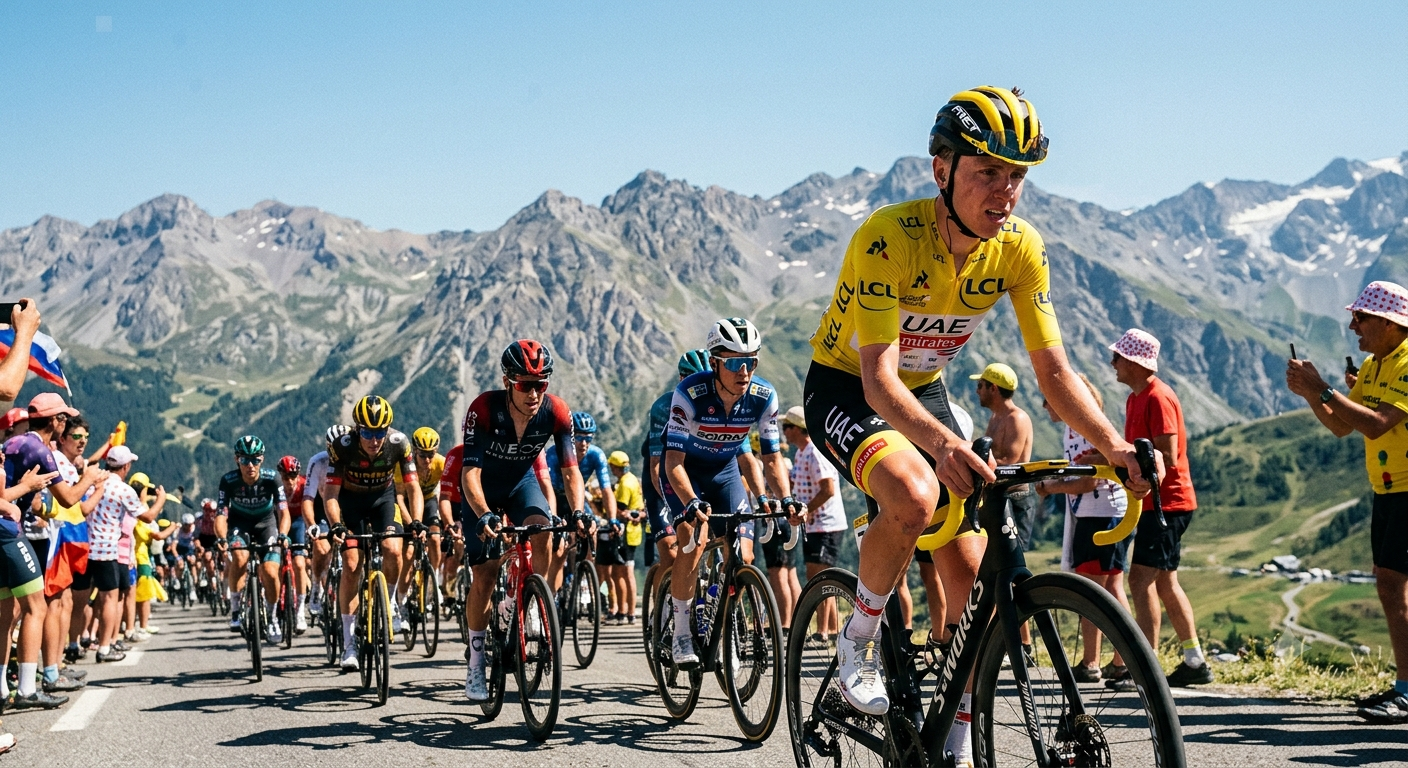
The Tour de France is never a walk in the park, but the 2026 edition is shaping up to be one of the most brutal in recent history. With a route that offers no respite and pushes riders to their absolute physical and mental limits, this year's Grande Boucle is being fought on two fronts: the extreme elevation profiles and, equally merciless, the weather. The record-breaking temperatures currently sweeping across France and the rest of Europe risk becoming the ultimate judge of the race.
A Route That Leaves No Room to Breathe
While the first week of the Tour traditionally serves as a warm-up and a stage for the sprinters, the 2026 design has completely torn up the rulebook from day one. The mountains arrive early, and they are unforgiving. The peloton has found itself tackling extreme gradients and iconic climbs without any time to settle into a flat rhythm. This tactical choice by the organizers has raised the bar of physical exertion: for the pros, it means racing constantly on a knife-edge, while for amateur cyclists who love to emulate the champions, it confirms that modern cycling demands impeccable preparation and top-tier equipment.
The Unknown Factor of the European Heatwave
The real adversary to beat in the final weeks, however, does not wear a rival team's jersey. It is the thermometer. The anomalous heatwave hitting Europe is making its presence felt heavily on the French asphalt, with temperatures consistently soaring past 40°C during the hottest hours of the day. Pedaling in these conditions turns every mountain pass into a furnace. The melting tarmac radiates the accumulated heat back up, the air grows heavy, and regulating core body temperature becomes just as crucial as race strategy. It is no longer just about pushing watts; it is about surviving dehydration and heat stroke.
Hydration and Effort Management: Lessons from the Pros
What can amateur riders learn from watching the pros battle both the clock and the sweltering heat? The golden rule is management. During stages like these, riders consume up to 10–12 bottles of fluids packed with mineral salts and carbohydrates, and using ice vests or ice socks down the back of the jersey has become standard practice. When temperatures spike, cycling efficiency drops drastically, and the heart works at a much higher heart rate even at the same power output. This is a vital lesson for anyone tackling major alpine climbs in the summer: never underestimate your hydration strategy and always listen to your body's warning signs.
Conquer Your Own Mythic Climbs
The heroic feats of the Tour de France inevitably ignite the desire to test our own limits. Whether it is climbing the giants of France or tackling the iconic passes closer to home, summer remains the peak season for road cycling. However, taking on demanding routes in high temperatures requires not only respect for the weather but also the right gear. A bike with proper climbing gears, perfectly maintained brakes for hot descents, and reliable components are key to enjoying the ride safely, turning a day of extreme effort into an unforgettable memory.
→ Book your road bike like a champion
Tag: Tour de France 2026, Professional Cycling, Grand Tours, Iconic Climbs, Summer Training, Cycling Hydration, Effort Management, Cycling Tips, Summer Cycling, Bike Touring
Gran Fondo "Il Lombardia Felice Gimondi" 2026 parte da Bergamo